
Insights / · 3 min read
How we build a custom statue for a game event, from 3D file to show floor
A statue on a show floor has to stop people in their tracks, survive the crowd and be ready for the next event. Here is how our Montréal workshop gets there, step by step, with four recent builds.
- Statues in this article
- 4
- Tallest
- 3 m (Sledge, Six Invitational 2025)
- Walk-in
- 2.35 m tall, nearly 3 m across
- Made in
- Montréal, 100% in-house
1. Start from an image fans already love
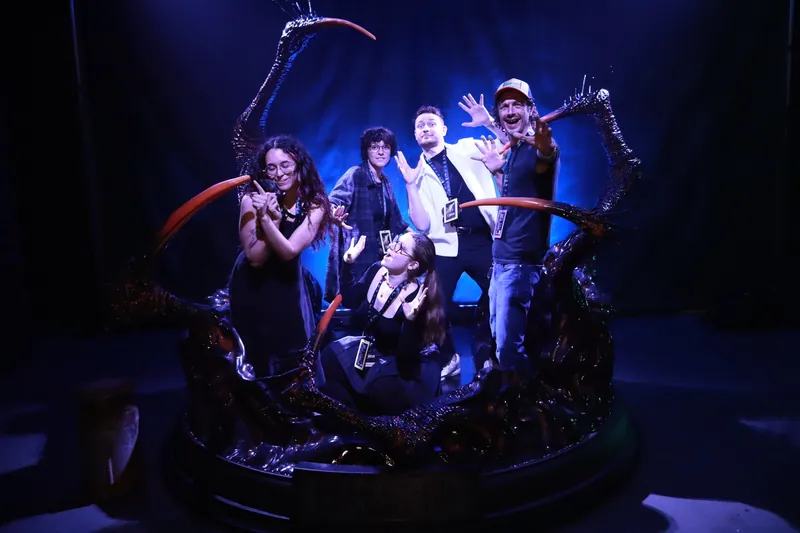
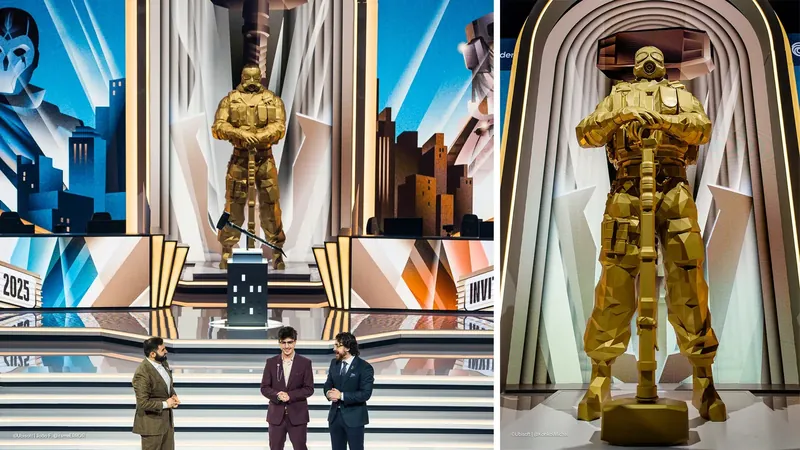
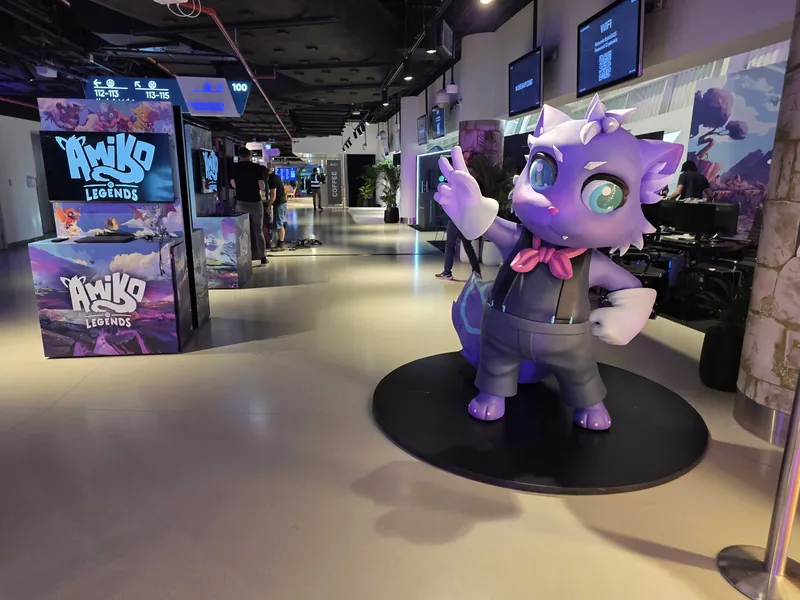
The best statues are recognised before anyone reads the sign. For Dead by Daylight’s 10th anniversary at the Grand Quay in Montréal on June 14, 2026, Behaviour Interactive gave us a clear starting point: the collector figurine from the 10th Anniversary Collector’s Set, where The Entity’s claws close in around the characters. For Ubisoft’s Six Invitational 2025 in Boston, it was the operator Sledge. For Aurory at Solana Breakpoint 2025 in Abu Dhabi, it was Helios, the creature that is the face of the Amiko Legends universe.
Choosing that reference is a decision for the brand. Our job is to keep everything that makes it iconic while scaling it from the size of a figurine, or a screen, to the size of a person.
2. Design the experience, not only the object
At an event, a statue is a meeting point and a photo moment. That changes the brief. For Dead by Daylight, the mission was to recreate the figurine at full scale with real people at the centre: the final piece leaves an open space large enough for two people to stand in the heart of The Entity’s claws. The claws look menacing, but there is not a single edge that could hurt anyone, and the centre stays accessible to everyone.

3. Model and slice in 3D
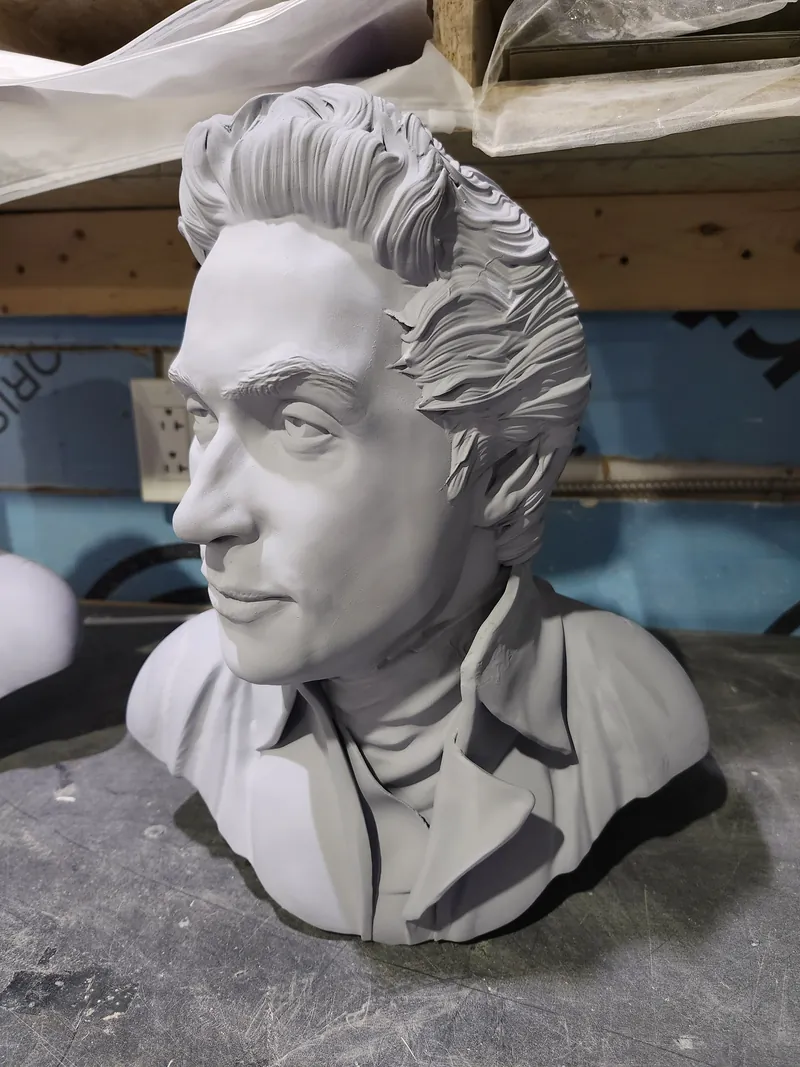
Everything starts as a 3D file. We model the piece, then slice it into parts that our printers can produce without losing detail. On our full-scale cinema bust, the slicing was optimised for multi-part printing to keep every strand of hair and every fold of fabric. The way a statue is cut also decides how it will be assembled, painted and transported, so these choices are made at the very start.

4. Print in-house
All the components of the Sledge statue were 3D-printed in our workshop, on our own machines. Printing in-house keeps quality, materials and schedule in our hands: if a part needs to be adjusted, it is reprinted in the workshop rather than ordered again from a supplier. The Sledge statue alone took hundreds of hours of work.


5. Assemble, prime and hand-paint
Printed parts are assembled, filled and primed until the joins disappear. Then our artists paint by hand. Helios, the 1.8-metre statue we made for Aurory, is hand-painted; the Sledge statue was meticulously assembled and hand-painted in Montréal. This is the stage where a printed object becomes a character.

6. Engineer it to travel
A statue that can only be shown once is an expensive photo. Helios was engineered for easy assembly, disassembly and transport by a small team, so it can follow Aurory from event to event. The Dead by Daylight statue comes apart and back together easily for the same reason. Custom crates protect each piece on the road, and we handle packaging and delivery by land, sea or air.


7. Think beyond the statue
The statue is the centrepiece; what surrounds it makes the activation. For Dead by Daylight, we also customised four claw machines wrapped in the game’s artwork and loaded with 3,000 Maurice plushies made for the occasion. For the Six Invitational, we designed and produced the trophies awarded to the champions. One workshop for the whole set keeps the look consistent and the planning simple.

